
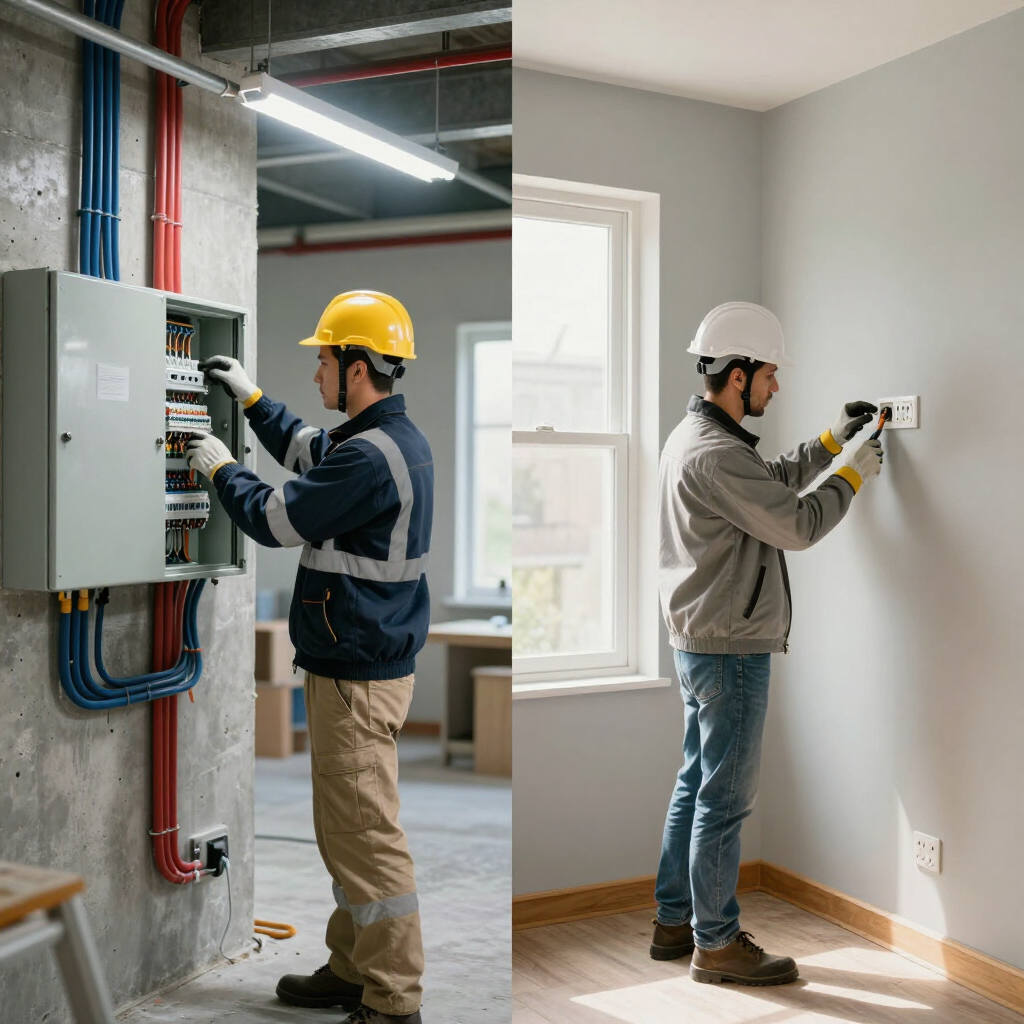
Not all electrical work is the same. While both commercial and residential electricians are trained to install, repair, and maintain electrical systems, the environments they work in and the services they provide can differ significantly. Understanding these differences helps homeowners, business owners, and property managers choose the right professional for their project and ensures the work is completed safely and efficiently.
What Does a Residential Electrician Do?
Residential electricians focus on electrical systems found in single-family homes, townhouses, condominiums, and apartment buildings. Their work is centered on providing homeowners with safe, dependable electrical systems that support everyday living.
Common residential electrical services include:
- Electrical panel upgrades
- Outlet and switch installation
- Indoor and outdoor lighting
- Ceiling fan installation
- EV charger installation
- Backup generator installation
- Home electrical inspections
- Troubleshooting and repairs
Whether you're renovating a home or addressing an electrical issue, a residential electrician understands the unique requirements of residential wiring and local building codes.
What Does a Commercial Electrician Do?
Commercial electricians work on larger electrical systems found in offices, retail stores, restaurants, warehouses, medical facilities, and other commercial properties.
These projects often involve more complex electrical infrastructure designed to support larger equipment, higher electrical loads, and multiple occupants. Organizations such as the National Electrical Contractors Association (NECA) provide industry resources related to electrical contracting, safety, workforce development, and professional standards.
Common commercial electrical services include:
- Commercial lighting installation
- Electrical panel upgrades
- Tenant fit-outs
- Network cabling
- Emergency lighting systems
- Electrical maintenance
- Equipment wiring
- Code compliance inspections
Commercial projects often require careful planning to minimize downtime and keep businesses operating efficiently.
| Residential Electrician | Commercial Electrician |
|---|---|
| Homes and apartments | Offices and commercial buildings |
| Smaller electrical systems | Larger electrical infrastructure |
| Household appliances | Commercial equipment |
| Home renovations | Tenant improvements and business expansions |
| Family safety and comfort | Business operations and compliance |
Key Differences Between Residential and Commercial Electrical Work
Although the basic principles of electricity remain the same, commercial and residential projects present different challenges.
Residential work typically focuses on convenience, comfort, and family safety. Commercial work often requires larger electrical systems capable of supporting specialized equipment, lighting, networking infrastructure, and multiple workspaces.
Commercial electricians may also coordinate with contractors, architects, and facility managers throughout larger construction or renovation projects.
Why Experience Matters
Hiring an electrician with experience in the type of property you own helps ensure your project is completed correctly.
For example:
A homeowner installing an EV charger benefits from a residential electrician familiar with home electrical systems.
A business renovating office space needs a commercial electrician experienced in electrical layouts, lighting systems, and code compliance.
Choosing the right professional reduces delays and helps ensure dependable long-term performance.
Services That Benefit Both Homes and Businesses
Some electrical services apply to both residential and commercial properties.
These include:
- Electrical panel upgrades
- Backup generator installation
- LED lighting upgrades
- Surge protection
- Electrical inspections
- Troubleshooting electrical problems
A full-service electrical contractor can often provide both residential and commercial solutions, making it easier to work with one trusted company as your needs grow.
When Should You Call an Electrician?
It's a good idea to contact a licensed electrician if you notice recurring electrical issues or are planning improvements to your property.
Common reasons include:
- Frequently tripped breakers
- Flickering lights
- Adding new equipment
- Remodeling projects
- Installing an EV charger
- Upgrading lighting
- Expanding business operations
Addressing electrical concerns early helps improve safety and prevents larger issues from developing later.
Frequently Asked Questions
Can one electrical contractor handle both residential and commercial work?
Yes. Many licensed electrical contractors provide both residential and commercial electrical services. Be sure to ask about their experience with projects similar to yours.
Is commercial electrical work more complex?
Commercial electrical systems are often larger and designed to support higher electrical demands, making careful planning and code compliance especially important.
How do I know which electrician I need?
The type of property and project usually determines the best fit. A licensed electrical contractor can help evaluate your needs and recommend the right solution.
Contact East Coast Lighting and Energy, LLC.
Need a licensed electrician in Monmouth County, Ocean County, or elsewhere in New Jersey? East Coast Lighting and Energy, LLC. provides dependable residential and commercial electrical services.
Call
(732) 222-5197 or
Contact Us today to get started.
Commercial Electrician vs. Residential Electrician: Understanding the Differences
Commercial Electrician vs. Residential Electrician: Understanding the Differences
